
Understanding the Maldives Climate & Geography
The Maldives is often described as a tropical destination, but in reality, it is equatorial. The equator runs directly through the Maldives, creating a climate that is remarkably consistent throughout the year. The Maldives has average air temperatures of around 29–31°C and ocean temperatures consistently 27–29°C. Rather than distinct seasons, the weather is influenced by two monsoon patterns, the northeast monsoon (November to April), which traditionally brought calmer seas and drier, sunnier conditions, and the southwest monsoon (May to October), which traditionally introduced more variable conditions, including passing showers and shifting winds. However, these changes are rarely extreme with rain usually short-lived, and sunshine is still frequent.
Since 2006, the Maldives weather patterns have become less predictable each year, with travellers now experiencing variable weather in high season and travellers experiencing high season weather in shoulder-low season. The Maldives does not experience cyclones or hurricanes, and overall, now travellers can expect a warm, beautiful environment year-round where conditions gently fluctuate rather than dramatically change.
What “Variable Weather” Really Means
Rather than thinking in terms of “good” or “bad” weather, it is more accurate to think of the Maldives weather as variable now at any time of the year. This variation does not mean disruption. It simply reflects a natural rhythm where conditions can gently shift from day to day. You may experience a day of brilliant sunshine, followed by light winds that bring passing cloud, possible rain showers, and then a return to clear skies.
At times, there may be short, intermittent showers, but these are simply part of the movement of the environment, not something that defines your stay. The Maldives does not lose its appeal with variation, it reveals different facets of it. I know people might say that they don’t want to go to the Maldives to experience rain however the luxury resorts in the Maldives offer a wide variety of incredible activities that people may not be aware of. A fun fact I can share with you as an avid marine enthusiast is that snorkelling in the rain is absolutely incredible. The fish become extremely active as they think the rain drops are food. If you are a marine enthusiast, this is a great time to explore the house reef as it’s a fish feeding frenzy. For those not so marine enthusiastic, head to the spa. There is nothing better than a massage with the sound of the rain drops lightly tapping the palm trees outside. For the gym enthusiasts, grab a work out in the state of the art gym overlooking the turquoise lagoon. For the foodies, take a cooking class with a Micheline star Chef. For the wine enthusiasts, take a tour of the resort wine cellar, combined with a tasting, what an afternoon. There is so much more to do and it is still so beautiful.
Beyond Weather: What Else Should You Consider?
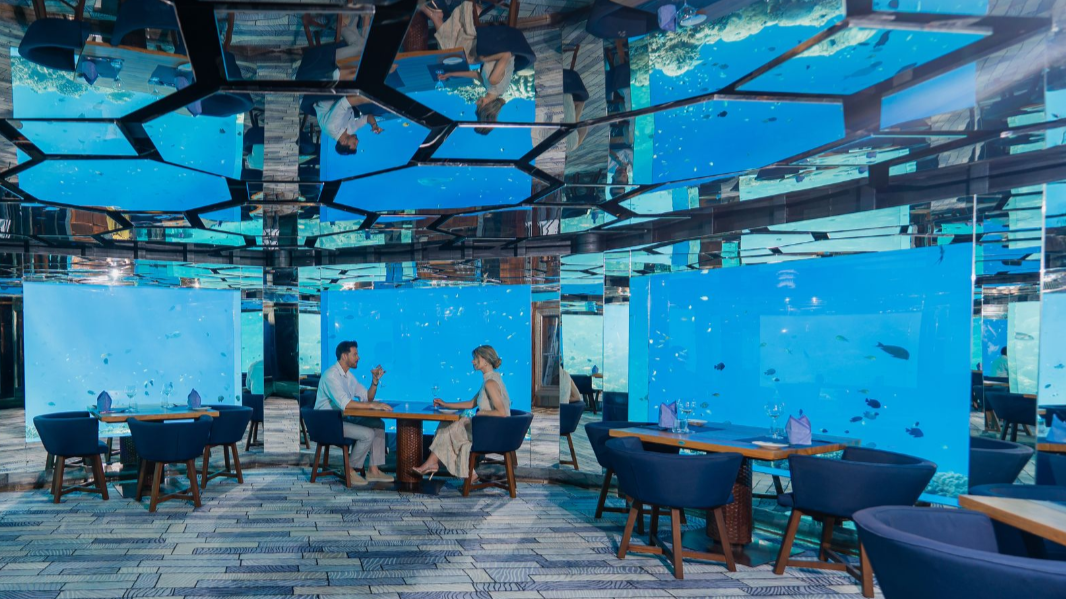
While weather is often the focus, there are other elements that are equally, if not more, important when deciding when to travel. The Maldives is one of the richest marine environments in the world, and seasonality plays a role in what you can experience beneath the surface.
Manta rays, for example, are present throughout the Maldives but move between different atolls depending on the time of year. In certain months, you will find them congregating in specific regions, offering extraordinary opportunities to observe them in large numbers. Similarly, whale sharks are more consistently sighted in particular atolls, but conditions and accessibility can vary depending on the season.
Diving, too, shifts subtly across the year. Different atolls offer different conditions depending on currents, visibility, and marine activity, meaning that the “best” time to travel can also depend on what you most want to experience. Surfing in the Maldives is seasonal and locations and resorts are dependent on your surfing ability.
These factors, if important to your holiday, are critical to get right and can define your time in the Maldives in a far more meaningful way than simply focusing on the weather alone.
Understanding Seasonal Pricing
While weather patterns have evolved, pricing structures in the Maldives remain aligned to traditional seasons. As specialists and wholesalers in the Maldives, we work with clearly defined high, shoulder, and low season rate periods, which continue to follow the historic calendar. These rate periods are set by the resorts and can vary precisely by date, often shifting from one pricing tier to another overnight. This is where working with an expert becomes particularly valuable.
Having a detailed understanding of when these rate changes occur allows us to guide clients in a way that is simply not possible when relying on publicly available online pricing. What may appear to be a fixed travel window can, in reality, hold significant flexibility. For example, you may be considering a two-week period for your stay, without realising that by adjusting your travel dates, sometimes by as little as a single day, you can move from one rate period into another. This can result in savings of several thousand dollars, without compromising the experience itself.
When Should You Travel?
Over the last 23 years and the 341 days I have spent in the Maldives, spread strategically throughout every month of the year, I have experienced every type of weather in every month, multiple times over.
Our advice, based on decades of first-hand experience, is simple: Travel when it suits you, not when you think you should. The Maldives is no longer a destination defined by rigid seasons. It is defined by consistency, warmth, and subtle variation. Understanding this allows you to approach your travel with confidence and clarity.
